
Body Fat Percentage Calculator & Body Fat Chart | HYROXS
Body Fat Percentage Calculator
170 cm 100 cm250 cm 38 cm 20 cm60 cm 85 cm 50 cm180 cm 95 cm 50 cm180 cm Body Fat 15.2% U.S. Navy Method Estimate Fitness See Beyond the ScaleBody fat percentage tells you more than weight alone. Track it over time alongside FFMI to see true body composition changes.
Get Body Comp Tips #bf-calc-widget input[type=range] { background: linear-gradient(to right, #f5e94e 0%, #f5e94e 0%, #333 0%, #333 100%); border: none; box-shadow: none; } #bf-calc-widget input[type=range]::-webkit-slider-thumb { -webkit-appearance: none; width: 24px; height: 24px; border-radius: 50%; background: #ffffff; border: none; cursor: pointer; box-shadow: none; } #bf-calc-widget input[type=range]::-moz-range-thumb { width: 24px; height: 24px; border-radius: 50%; background: #ffffff; border: none; cursor: pointer; box-shadow: none; } #bf-calc-widget input[type=range]::-moz-range-track { background: transparent; border: none; box-shadow: none; } #bf-calc-widget input[type=range]::-webkit-slider-runnable-track { border: none; box-shadow: none; background: transparent; } :root { --hx-bg-dark: #000000; /* Page background - Black */ --hx-card-bg: #111111; /* Card background - Dark Black */ --hx-card-border: #FFD400; /* Yellow border */ --hx-accent: #FFD400; /* Primary Yellow */ --hx-accent-light: #FFE44D; /* Light Yellow */ --hx-text-primary: #FFFFFF; /* White text */ --hx-text-secondary: #D6D6D6; /* Light Gray text */ --hx-radius: 14px; } .hx-calc-hub { background: var(--hx-bg-dark); padding: 64px 20px; font-family: 'Inter', 'Helvetica Neue', Arial, sans-serif; } .hx-calc-hub__inner { max-width: 1160px; margin: 0 auto; } .hx-calc-hub__eyebrow { display: block; text-align: center; color: var(--hx-accent); font-size: 13px; font-weight: 700; letter-spacing: 1.5px; text-transform: uppercase; margin-bottom: 12px; } .hx-calc-hub__title { text-align: center; color: var(--hx-text-primary); font-size: clamp(28px, 4vw, 40px); font-weight: 800; line-height: 1.15; margin: 0 0 14px; } .hx-calc-hub__subtitle { text-align: center; color: var(--hx-text-secondary); font-size: 16px; max-width: 620px; margin: 0 auto 48px; line-height: 1.6; } .hx-calc-grid { display: grid; grid-template-columns: repeat(4, 1fr); gap: 20px; } @media (max-width: 900px) { .hx-calc-grid { grid-template-columns: repeat(2, 1fr); } } @media (max-width: 540px) { .hx-calc-grid { grid-template-columns: 1fr; } } .hx-calc-card { display: flex; flex-direction: column; background: var(--hx-card-bg); border: 1px solid var(--hx-card-border); border-radius: var(--hx-radius); padding: 28px 22px; text-decoration: none; transition: transform 0.2s ease, border-color 0.2s ease, background 0.2s ease; } .hx-calc-card:hover { transform: translateY(-4px); border-color: var(--hx-accent); background: #000000; } .hx-calc-card__icon { width: 46px; height: 46px; border-radius: 10px; background: rgba(255, 90, 31, 0.12); display: flex; align-items: center; justify-content: center; margin-bottom: 18px; } .hx-calc-card__icon svg { width: 22px; height: 22px; stroke: var(--hx-accent); } .hx-calc-card__title { color: var(--hx-text-primary); font-size: 17px; font-weight: 700; margin: 0 0 8px; line-height: 1.3; } .hx-calc-card__desc { color: var(--hx-text-secondary); font-size: 13.5px; line-height: 1.55; margin: 0 0 20px; flex-grow: 1; } .hx-calc-card__cta { display: inline-flex; align-items: center; gap: 6px; color: var(--hx-accent-light); font-size: 13px; font-weight: 700; text-transform: uppercase; letter-spacing: 0.5px; } .hx-calc-card__cta svg { width: 14px; height: 14px; stroke: var(--hx-accent-light); transition: transform 0.2s ease; } .hx-calc-card:hover .hx-calc-card__cta svg { transform: translateX(4px); }Check for other Fitness calculators
Every metric you need to understand your body composition, energy needs, and true fitness potential — free, science-backed, and built for HYROX athletes.
<!-- Body FatBMI Calculator
Check your body mass index and see where you fall on the standard scale.
Calculate nowBMR Calculator
Find your basal metabolic rate — the calories your body burns at rest.
Calculate nowCalorie Calculator
Get your daily calorie needs for maintenance, fat loss, or muscle gain.
Calculate nowLean Body Mass Calculator
Find out how much of your weight is muscle, bone, and organ mass.
Calculate nowFFMI Calculator
Check your fat-free mass index and see your natural muscle potential.
Calculate nowIdeal Weight Calculator
Get your ideal weight range based on height, gender, and frame.
Calculate nowBody Recomposition Calculator
Plan your fat loss and muscle gain targets at the same time.
Calculate nowBODY FAT PERCENTAGE CALCULATOR: DISCOVER YOUR TRUE BODY COMPOSITION
Want to know how much of your body weight is actually fat? The HYROXS Body Fat Percentage Calculator estimates your body fat using scientifically validated formulas, helping you understand your body composition beyond the number on the scale.
Whether your goal is fat loss, muscle gain, athletic performance, or overall health, body fat percentage provides a clearer picture than body weight or BMI alone. Simply enter your measurements to receive your estimated body fat percentage, body fat category, and personalized fitness insights.
This guide explains how body fat percentage is calculated, what your result means, healthy ranges for men and women, and how to improve your body composition safely.
BODY FAT PERCENTAGE CALCULATOR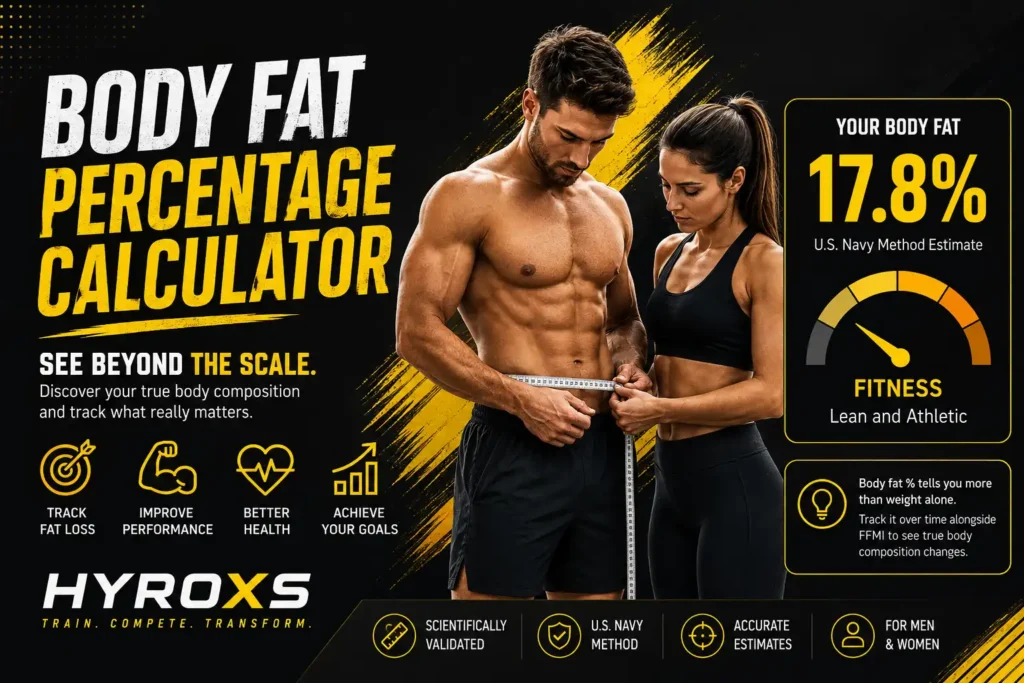 BODY FAT PERCENTAGE CALCULATOR
UNDERSTAND YOUR BODY FAT PERCENTAGE
Body fat percentage is the proportion of fat tissue compared to your total body weight. Unlike BMI, which only considers your height and weight, body fat percentage distinguishes between fat mass and lean body mass, including muscles, bones, organs, and water.
Because of this, body fat percentage provides a much better understanding of your overall fitness and health. Two people may have the same body weight—or even the same BMI—but very different body fat percentages, resulting in completely different body compositions and health risks.
Monitoring body fat percentage helps you evaluate fat loss progress more accurately than relying on the scale alone, especially when building muscle and improving athletic performance.
BODY FAT PERCENTAGE CALCULATORBODY FAT PERCENTAGE BY AGE
Body fat percentage naturally changes as you get older. While age itself doesn't directly cause fat gain, several factors—including a slower metabolism, hormonal changes, reduced muscle mass, and lower physical activity levels—can lead to an increase in body fat over time.
For this reason, healthy body fat ranges are slightly higher for older adults than for younger adults. Maintaining muscle through regular strength training, adequate protein intake, and an active lifestyle can help slow these age-related changes and support a healthier body composition.
Healthy Body Fat Percentage by Age
| Age Group | Men | Women |
|---|---|---|
| 20–39 years | 8–19% | 21–32% |
| 40–59 years | 11–21% | 23–33% |
| 60–79 years | 13–24% | 24–35% |
BODY FAT PERCENTAGE CALCULATORNote: These ranges represent general healthy body fat percentages for adults. Athletes and highly active individuals may have lower body fat levels while remaining healthy. Individual goals, genetics, and medical conditions should also be considered when interpreting results.
Why Does Body Fat Increase with Age?
As you age, your body undergoes several natural physiological changes that can make maintaining a lower body fat percentage more challenging.
Loss of Muscle Mass
Beginning around age 30, adults gradually lose muscle mass—a process known as sarcopenia. Since muscle tissue burns more calories than fat, having less muscle can reduce your resting metabolic rate, making it easier to gain body fat if calorie intake remains unchanged.
Slower Metabolism
Metabolism generally slows with age due to changes in muscle mass, hormone levels, and overall activity. This means your body requires fewer calories than it did during your younger years.
Hormonal Changes
Hormonal shifts can significantly influence body composition.
Men may experience a gradual decline in testosterone, making it more difficult to build and maintain muscle.
Women often see changes during menopause, including reduced estrogen levels, which can encourage fat storage around the abdomen.
Reduced Physical Activity
Many adults become less active as work, family responsibilities, or lifestyle changes reduce the amount of daily movement and exercise. Lower activity levels decrease calorie expenditure and may contribute to higher body fat percentages over time.
Changes in Fat Distribution
Aging not only increases total body fat but also changes where fat is stored. Many people notice greater accumulation of visceral fat—the fat surrounding internal organs in the abdominal region. Higher levels of visceral fat are associated with an increased risk of cardiovascular disease, type 2 diabetes, and metabolic syndrome.
Can You Maintain a Healthy Body Fat Percentage as You Age?
Absolutely. While some increase in body fat is a normal part of aging, lifestyle habits play a much larger role than age alone. Many adults maintain excellent body composition well into their 50s, 60s, and beyond by following healthy habits.
To support a healthy body fat percentage:
Perform strength training at least 2–3 times per week to preserve muscle mass.
Eat sufficient protein to support muscle maintenance and recovery.
Stay physically active with regular walking, running, cycling, or other cardiovascular exercise.
Prioritize 7–9 hours of quality sleep each night.
Manage stress, as chronic stress can contribute to increased fat storage.
Track your progress consistently using body fat percentage rather than relying on body weight alone.
Remember that the goal isn't to achieve the lowest possible body fat percentage—it is to maintain a healthy balance of fat and lean muscle that supports long-term health, energy, and physical performance.
BODY FAT PERCENTAGE CALCULATORHYROXS Tip: If you're training for HYROX or other endurance events, combine your body fat percentage with your FFMI (Fat-Free Mass Index) and Lean Body Mass measurements. This gives a more complete picture of whether you're losing fat while preserving the muscle needed for strength, speed, and race performance.
THE SCIENCE BEHIND BODY FAT PERCENTAGE
Body fat plays several essential roles in the body. It stores energy, protects internal organs, regulates hormones, and helps maintain normal body temperature. However, having either too little or too much body fat can negatively affect health and physical performance.
Modern body fat calculators estimate body composition using validated equations based on body measurements. According to a comparative study published in the National Institutes of Health (PMC), The most commonly used method is the U.S. Navy Circumference Method, which estimates body fat from measurements such as height, waist, neck, and hips (for women).
Although laboratory methods like DEXA scans remain the gold standard, circumference-based calculations provide an accurate and practical estimate for most people and are widely used by fitness professionals and military organizations.
SIGNS YOUR BODY FAT PERCENTAGE MAY BE TOO LOW
While reducing excess body fat can improve health and athletic performance, having too little body fat can be just as harmful. Body fat is essential for hormone production, energy storage, organ protection, vitamin absorption, and overall bodily function. Dropping below essential body fat levels may negatively affect both your health and performance.
The exact threshold varies between individuals, but body fat percentages below 5% for men and 10–13% for women are generally considered close to essential fat levels and should only be maintained under professional supervision, if at all.
Signs of Low Body Fat in Men
Very low body fat can reduce testosterone production and affect both physical and mental performance.
Low Testosterone Levels
Testosterone plays a key role in muscle growth, recovery, libido, mood, and bone health. Extremely low body fat may reduce testosterone production, leading to symptoms such as:
Reduced strength and muscle mass
Lower sex drive
Decreased energy levels
Mood changes and irritability
Difficulty maintaining or building muscle
Persistent Fatigue
When body fat becomes too low, the body has fewer energy reserves. Many people experience:
Constant tiredness
Low energy during workouts
Difficulty concentrating
Reduced motivation
Feeling cold more often
Poor Recovery
Recovery is essential for improving fitness. Inadequate body fat can slow recovery by limiting energy availability for muscle repair and hormone production.
Common signs include:
Longer muscle soreness after training
Reduced workout performance
Increased risk of overtraining
More frequent injuries
Weakened immune function
Signs of Low Body Fat in Women
Women naturally require a higher body fat percentage than men to support normal reproductive and hormonal function. Extremely low body fat can interfere with these processes.
Menstrual Irregularities
One of the most common signs of excessively low body fat is disruption of the menstrual cycle.
Possible symptoms include:
Irregular periods
Missed menstrual cycles (amenorrhea)
Reduced fertility
Changes in reproductive hormone levels
Women experiencing persistent menstrual changes should consult a healthcare professional.
Hormonal Imbalances
Body fat helps regulate hormones such as estrogen. Very low body fat levels may contribute to:
Mood swings
Low energy
Reduced athletic performance
Sleep disturbances
Difficulty recovering after exercise
Reduced Bone Health
Long-term low estrogen levels associated with very low body fat may reduce bone mineral density, increasing the risk of:
Stress fractures
Osteopenia
Osteoporosis later in life
This is especially important for female athletes participating in high-volume endurance or strength training.
Low Body Fat and Athletic Performance
Many people assume that lower body fat always leads to better athletic performance, but this is not always true. While reducing excess fat can improve speed and endurance, dropping below a healthy range may actually decrease performance.
Athletes with excessively low body fat may experience:
Reduced strength and power
Slower recovery between training sessions
Increased injury risk
More frequent illness
Decreased endurance due to low energy availability
For sports like HYROX, maintaining a balance between lean muscle mass and healthy body fat is generally more beneficial than pursuing the lowest possible body fat percentage.
Focus on Performance, Not Just the Number
Your ideal body fat percentage depends on your age, sex, training level, and fitness goals. Rather than aiming for the lowest possible percentage, focus on achieving a body composition that supports your health, recovery, and long-term performance.
Track your body fat alongside other important metrics such as:
Lean Body Mass to monitor muscle preservation.
FFMI (Fat-Free Mass Index) to assess muscular development.
Body Weight to observe overall changes.
Strength and Performance to ensure your training is progressing.
Improving body composition should always support better health—not compromise it. A sustainable approach that combines proper nutrition, strength training, adequate recovery, and consistent exercise is the safest and most effective way to achieve long-term results.
BODY FAT PERCENTAGE CALCULATORHOW YOUR BODY FAT pERCENTAGE IS CALCULATed

The HYROXS Body Fat Calculator estimates your body fat percentage using body measurements that reflect how fat is distributed across your body.
The most commonly used method is the U.S. Navy Body Fat Formula, which has been validated for both men and women and provides a reliable estimate without requiring expensive equipment.
U.S. Navy Formula (Men)
Body Fat % = 86.010 × log₁₀ (Waist − Neck) − 70.041 × log₁₀ (Height) + 36.76
Required Measurements
- Height
- Neck Circumference
- Waist Circumference
These measurements estimate body fat based on fat distribution around the abdomen and neck.
U.S. Navy Formula (Women)
Body Fat % = 163.205 × log₁₀ (Waist + Hip − Neck) − 97.684 × log₁₀ (Height) − 78.387
Required Measurements
- Height
- Neck Circumference
- Waist Circumference
- Hip Circumference
Women's body fat is naturally distributed differently than men's, which is why hip measurements are included.
BODY FAT PERCENTAGE CALCULATORBODY FAT CATEGORIES FOR MEN
| Body Fat % | Category | Fitness Level |
|---|---|---|
| 2–5% | Essential Fat | Minimum required for survival |
| 6–13% | Athlete | Elite conditioning |
| 14–17% | Fitness | Lean and athletic |
| 18–24% | Healthy | Recommended range |
| 25%+ | Obese | Increased health risk |
BODY FAT PERCENTAGE CALCULATOR
BODY FAT CATEGORIES FOR WOMEN
| Body Fat % | Category | Fitness Level |
|---|---|---|
| 10–13% | Essential Fat | Minimum required for health |
| 14–20% | Athlete | Elite conditioning |
| 21–24% | Fitness | Lean and fit |
| 25–31% | Healthy | Recommended range |
| 32%+ | Obese | Increased health risk |
Important: Women naturally have a higher body fat percentage than men due to hormonal differences and reproductive functions. A healthy body fat range for women is expected to be higher than that of men.
BODY FAT PERCENTAGE CALCULATOR https://youtu.be/5K9QhkPww44?si=WE9k_y25iVDip44MBODY FAT VS BMI: WHICH IS MORE ACCURATE?
| Metric | Measures | Best For | Limitations |
|---|---|---|---|
| BMI | Weight relative to height | General health screening | Doesn't distinguish fat from muscle |
| Body Fat % | Actual body fat | Body composition | Requires body measurements |
| FFMI | Lean muscle relative to height | Athletes | Requires body fat percentage |
| Waist-to-Height Ratio | Fat distribution | Cardiometabolic health | Doesn't measure body composition |
WHY BODY FAT PERCENTAGE MATTERS
1. Track Real Fat Loss
The scale doesn't tell the whole story. Monitoring body fat helps you understand whether you're losing fat while maintaining muscle.
2. Improve Athletic Performance
Maintaining a healthy body fat percentage can improve endurance, speed, agility, and overall physical performance.
3. Reduce Health Risks
Excess body fat, especially around the abdomen, is associated with an increased risk of heart disease, type 2 diabetes, high blood pressure, and metabolic disorders.
4. Set Realistic Fitness Goals
Knowing your body fat percentage allows you to set measurable goals instead of focusing only on body weight.
BODY FAT PERCENTAGE CALCULATORFrequently asked questions (FAQs)
What is body fat percentage?
Body fat percentage represents the percentage of your total body weight made up of fat tissue. It provides a more accurate picture of body composition than body weight or BMI alone.
BODY FAT PERCENTAGE CALCULATORIs body fat percentage better than BMI?
Yes. BMI only compares height and weight, while body fat percentage estimates how much of your body consists of fat versus lean tissue, making it more useful for fitness tracking.
BODY FAT PERCENTAGE CALCULATORWhat is a healthy body fat percentage?
For most adults, a healthy body fat range is 18–24% for men and 25–31% for women, although this varies depending on age, fitness level, and personal goals.
BODY FAT PERCENTAGE CALCULATORCan athletes have very low body fat?
Yes. Competitive athletes often maintain lower body fat percentages than the general population, but extremely low levels are usually not necessary or sustainable for long-term health.
BODY FAT PERCENTAGE CALCULATORHow often should I measure body fat?
Measuring every 2–4 weeks is ideal for tracking progress. Daily measurements are unnecessary because body composition changes gradually over time.
BODY FAT PERCENTAGE CALCULATORBody fat percentage represents the percentage of your total body weight made up of fat tissue. It provides a more accurate picture of body composition than body weight or BMI alone.
BODY FAT PERCENTAGE CALCULATORYes. BMI only compares height and weight, while body fat percentage estimates how much of your body consists of fat versus lean tissue, making it more useful for fitness tracking.
BODY FAT PERCENTAGE CALCULATORFor most adults, a healthy body fat range is 18–24% for men and 25–31% for women, although this varies depending on age, fitness level, and personal goals.
BODY FAT PERCENTAGE CALCULATORYes. Competitive athletes often maintain lower body fat percentages than the general population, but extremely low levels are usually not necessary or sustainable for long-term health.
BODY FAT PERCENTAGE CALCULATORMeasuring every 2–4 weeks is ideal for tracking progress. Daily measurements are unnecessary because body composition changes gradually over time.
BODY FAT PERCENTAGE CALCULATOR BODY FAT PERCENTAGE CALCULATOR